 |
 |
 |
 |
 |
Biografía
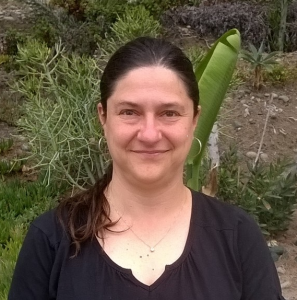 (Última actualización: Agosto 2026)
Educación:
Física por la Facultad de Ciencias, UNAM (1996)
Diplomado en Matemáticas Avanzadas, Cambridge, UK (MAst in Mathematics, 1997)
Doctorado en matemáticas aplicadas, Cambridge, UK (2002)
MSc in HPC and Data Science, University of Edinburgh, UK (en linea, 2023 a la fecha)
Trayectoria Profesional:
Investigador Titular C (Senior Researcher, Professor), 2014 a la fecha
Lecturer, Plymouth University, UK (2010-2013)
Academic Fellow, Plymouth University, UK (2005-2010)
Postdoctorate Fellow, University of Wales Bangor, UK (2002-2005)
Participación en Proyectos:
CIGOM-Ampliación, Oceanographic Buoys Subproject (2021-2023)
Wind Energy (eg. OFELIA: 2013-2015, MEWA: 2018-2021)
Marine and Tidal Current Energy (eg. CEMIE-OCEANO: 2017-2021)
Wave Energy (eg. PRIMARE: 2008-2011)
Marine Spatial Planning (eg. PEGASEAS: 2012-2014)
Marine Institute, Plymouth University, UK (2008-2011)
Mathematics for Coastal Engineers Workshop (2007)
SANDPIT Project (as postdoc, University of Wales Bangor, 2002-2005)
Becas y Distinciones:
CONAHCYT Visiting Fellowship (2023-2024)
Applied Users programme of NASA’s ICESat-2 mission (2020 to date)
Visiting Fellowship Award, University of Lille (2007). With Marc Lefranc and Rebeca Hoyle.
Participación en Comités y Cuerpos Colegiados:
NASEM Conference Organizing Committee (2022-2024)
PRONACE en Energía y Cambio Climático (2018 a la fecha)
Coorganizadora de simposios y de actividades de divulgación, Energy Group, IOP (2023 a la fecha)
Comité Evaluador Premio Mejor Tesis de Licenciatura, Maestría y Doctorado, UGM (2018-2019)
NERC Comité Evaluador (2011-2014)
Editor y Revisor Académico:
Academic Editor, PLOS ONE (2011-2021)
Subject Editor, Atmosphere and Ocean Sciences, PLOS ONE (2021 to date)
Associate Reviewer for “Frontiers in Marine Science” (2014 to date).
Reviewer for MDPI journals (Energies, Sustainability, JMSE, etc.)
Supervisión de Estudiantes y Examinaciones Externas:
University of Plymouth (2005-2013), CICESE (2014 to date), COLEF (2016-2018), Instituto de Energías Renovables IER – UNAM (2018 to date)
Servicio y Membresía, Sociedades Científicas:
IMA, IOP Energy Group, UGM Board (2016-2021), UGM, SIAM, MexSIAM and AGU.
Miembro del Sistema Nacional de Investigadoras e Investigadores, SECIHTI (nivel II desde 2022).
Libros publicados al 2026:
Magar, V. (2020). Sediment transport and morphodynamics modelling for coasts and shallow environments. ISBN: 9781498753463. 214pp. CRC Press: Boca Raton, Florida.
Artículos y capítulos de libro arbitrados en 2002-2026:
Canul-Reyes, D.A., O. Rodríguez-Hernández, Ó. Martínez-Alvarado, V. Magar, E. Ramos (2025). A Methodology for Resolution Enhancement of ERA5 Reanalysis Time Series for Wind Energy Applications. Under review.
J. Enríquez-Zárate, C. N. Sánchez*, J.A. Enríquez-Santiago, V. Magar* (2025). Machine Learning imputation techniques for wind energy estimates: the case of Salina Cruz, Mexico. Under review. *: Corresponding authors.
Arias-Esquivel, V.A., Godínez, V., Gross, M., Bermúdez-Romero A., V. Magar (2025). Analysis of turbulence characteristics in a nearshore area beyond the surf zone of a mesotidal bay. Continental Shelf Research 12, 105530, ISSN 0278-4343, doi: 10.1016/j.csr.2025.105530.
Bermúdez-Romero, Anahí, Vanesa Magar, Manuel López-Mariscal, and Jonas D. De Basabe (2024). «Evaluation of Tidal Asymmetry and Its Effect on Tidal Energy Resources in the Great Island Region of the Gulf of California» Journal of Marine Science and Engineering 12, no. 10, 1740. https://doi.org/10.3390/jmse12101740.
García-Caballero, E., C. M. Appendini, B. Figueroa-Espinoza, M. E. Allende-Arandía, V. Magar, M. S. Gross (2023). Wind energy potential assessment for Mexico’s Yucatecan Shelf. Energy for Sus- tainable Development, 74, pp. 415–429.
Magar, V., A. Peña, A. N. Hahmann, D. A. Pacheco-Rojas, L. S. García-Hernández, M. S. Gross (2023). Wind Energy and The Energy Transition: Challenges and Opportunities for Mexico. Sustai- nability 15(6), 5496; doi: 10.3390/su15065496.
Magar, V. (2023). Markus Gross’ obituary. Wind Energy, 1-3. https://doi.org/10.1002/we.2808
Magar, V., Gross, M.S., García-Hernández, L.S., Hahmann, A.N., Pacheco-Rojas, D. A., Peña, A. (2023). La energía eólica en México: desafíos y oportunidades. Book chapter. Transición Energética Justa y Sustentable en México. Publisher: FCE and CONACYT.
García-Ochoa, R., Magar-Brunner, V., del Río Portilla, J.A. (2023) Generación distribuida y renova- ble: una opción para la democratización energética en México. Book chapter. Transición Energética Justa y Sustentable en México. Publisher: FCE and CONACYT.
Gross, M. S., V. Magar, A. Peña-Díaz* (2022). Evaluation of orography and roughness model in- puts, and deep neural network regression for wind speed predictions. Wind Energy, 1-16. https://doi.org/10.1002/we.2782. *: Corresponding author.
Bermúdez-Romero, A., V. Magar, M. S. Gross, V. M. Godínez, M. López-Mariscal, J. Candela (2021). In-stream tidal energy resources in macrotidal non-cohesive sediment environments: effect of morphodynamic changes at two bays in the upper Gulf of California. Journal of Marine Science and Engineering 9 (4), 411. Doi: 10.3390/jmse9040411.
Magar, V. y García-Hernández, L. S. (2021). Transición energética, una oportunidad para el crecimiento económico de México: Empleo y educación. In Vargas-López, J. M. (Ed.) Las Energías Alternativas Renovables en México: El Gran Tema. ADT Editor / UNISON: Ciudad de México, México.
Magar, V., V. M. Godínez, M. S. Gross, M. L. López-Mariscal, J. Candela, L. Zamudio (2020). In-Stream Energy by Tidal and Wind-Driven Currents: An analysis for the Gulf of California. Energies 13, 1095. doi: 10.3390/en13051095.
Gross, M.S. and V. Magar (2020). Wind induced currents in the Gulf of California from extreme events and impact on tidal energy devices. Journal of Marine Science and Engineering 8(80). doi: 10.3390/jmse8020080.
Gross, M., V. Magar, A. Peña (2020). The effect of averaging, sampling, and time-series length on wind power density estimations. Sustainability 12(8), 3431. doi: 10.3390/su12083431.
Ortiz-Aguilar, S., J. D. de Basabe*, M. Gonzalez-Escobar, V. Magar (2020). Theoretical signature of a cavern created by an underground nuclear explosion in 2-D exploration seismic data. Geophys. J. Int. 221, 1789–1801. doi: 10.1093/gji/ggaa074. (*: autor de correspondencia).
Mayor, Y.G., M. Gross*, V. Magar (2020). Towards a Better Design of Convection-Allowing Ensembles for Precipitation Forecasts over Ensenada, Baja California, Mexico. Atmosphere 11, 973; doi: 10.3390/atmos11090973. (*: autor de correspondencia).
Méndez-Turrubiates, R. F., Gross, M. S. and V. Magar (2019). Local Quantitative Precipitation Forecast with minimal data requirement – an ensemble approach. Weather and Forecasting, 35(3), 821–839. doi: 10.1175/WAF-D-19-0077.1.
Magar, V., M. S. Gross, L. González-García (2018). Offshore wind energy resource assessment under techno-economic and social-ecological constraints. Ocean and Coastal Management 152, 77-87. Doi: 1016/j.ocecoaman.2017.10.007
Greaves, D., C. Perez-Collazo, C. Crawford, B. Buckham, V. Magar, F. Acuña, S. Shin, H. Shi, Chenyu (2018) “Regional Activities”, En Greaves, D., G. Iglesias (Eds) “Wave and Tidal Energy”. Wiley and Sons. Doi: 10.1002/9781119014492.ch13
Magar, V. (2017) “Tidal Current Technologies: Brief overview and in-depth coverage of the State-of-the-Art”. En Rincón Mejía, E. A. y de las Heras, A. (eds), “Sustainable Energy Technologies”. Taylor and Francis, CRC Press (ISBN 978-1-138-03438-9).
Magar, V., L. González-García, M. S. Gross (2017). Evaluación Técnico-Económica del Potencial de Desarrollo de Parques Eólicos en Mar: el Caso del Golfo de California. BIOtecnia Vol. 19, E3. ISSN: 1665-1456.
Gross, M.S. and V. Magar (2016). Offshore Wind Energy Climate Projection Using UPSCALE Climate Data under the RCP8.5 Emission Scenario PLOS ONE 11(10): e0165423. doi: 10.1371/journal.pone.0165423. eCollection 2016.
Rivier, A., A. C. Bennis, G. Pinon, V. Magar, M. S. Gross (2016). Parameterization of wind turbine impacts on hydrodynamics and sediment transport. Ocean Dynamics, publ. online: 14/09/2016. doi: 10.1007/s10236-016-0983-6
Brown, S. A., V. Magar, D. M. Greaves, D. C. Conley (2016). Evaluation of turbulence closure models under spilling and plunging breakers in the surf zone. Coastal Engineering 114, 177-193.
Malarkey, J., V. Magar*, A. G. Davies (2015). Mixing efficiency of sediment and momentum above rippled beds under oscillatory flows. Continental Shelf Research, 108, 76-88. doi: 1016/j.csr.2015.08.004. (*: autor de correspondencia).
Gross, M.S. and V. Magar (2015). Offshore wind energy potential estimation using UPSCALE climate data, Energy Science and Engineering 3 (4), 342-359. doi: 10.1002/ese3.76
Magar, V.(2015). Estuarine sediment composition. In Michael Kennish (Eds.), Encyclopedia of Estuaries (pp. 285-289). Springer-Verlag.
Jamal, M. H., D. J. Simmonds and V. Magar (2014). Modelling gravel beach dynamics with XBeach. Coastal Engineering 89, 20-29.
Carpenter, A., V. Magar, Y. Salaün (2014). Effective practices to manage the impact of the human activities on the marine environment. In Laëtitia Petit and Angela Carpenter (Eds.), Towards Better Governance of the Channel Ecosystem (2014 ed., pp. 57-62).
Carpenter, A., V. Magar, Y. Salaün, A. Gault-Pouliquen (2014). Assessment of the impact of human activities on marine environment. In L Petit and A Carpenter (Eds.), Towards Better Governance of the Channel Ecosystem (2014 ed., pp. 51-56). Plymouth University.
Vyzikas, T., E Ransley, M Hann, D Magagna, D Greaves, D Simmonds, V Magar, D. Conley (2014). Integrated Numerical Modelling System for Extreme Wave Events at the Wave Hub Site. In Allsop, W. and K. Burgess (eds) “From Sea to Shore – Meeting the challenges of the Sea (Coasts, Marine Structures and Breakwaters 2013). ICE Pulishing. Doi: 10.1680/fsts.59757.133
Carter, A., V. Magar, J. Simm, B. Gouldby and M. Wallis (2014). Accounting for Multivariate Probabilities of Failure in Vertical Seawall Reliability Assessments. In Allsop, W. and K. Burgess (eds) “From Sea to Shore – Meeting the challenges of the Sea (Coasts, Marine Structures and Breakwaters 2013). ICE Pulishing. Doi: 10.1680/fsts.59757.133
Magar, V., Lefranc, R. B. Hoyle and D. E. Reeve (2012). Spectral quantification of nonlinear behaviour of the nearshore seabed and correlations with potential forcings at Duck, N.C., U.S.A. PLOS ONE7(6): e39196. doi:10.1371/journal.pone.0039196
Reeve, D. E., Y. Chen, S. Pan, Magar, D. Simmonds and A. Zacharioudaki (2011) An investigation of the impacts of climate change on wave energy generation: The Wave Hub, Cornwall, UK. Renewable Energy 36(9):2404-2413.
Zacharioudaki, A., S. Pan, D. Simmonds, Magar and D. E. Reeve (2011). «Future wave climate over the Western European Shelf». Ocean Dynamics, 61(6), 807-827, [DOI: 10.1007/s10236-011-0395-6]
Bearon, R. N. and V. Magar (2010). Simple models of the chemical field around swimming plankton. Plankton Res. 32 (11): 1599-1608 doi: 10.1093/plankt/fbq075
Reeve, D. E., J. M. Horrillo-Caraballo and Magar (2008). Statistical Analysis and Forecasts of Long-term Sandbank Evolution at Great Yarmouth, UK. Est. Coast. Shelf Sci. 79(3), pp. 387-399. http://dx.doi.org/10.1016/j.ecss.2008.04.01
Van der Werf, J.J., Magar, J. Malarkey, K. Guizien and T. O’Donoghue (2008). 2DHV modelling of sediment transport processes over full-scale ripples in regular asymmetric oscillatory flow. Cont. Shelf Res. 28, pp. 1040–1056.
Magar, V. & T. J. Pedley (2005). Average nutrient uptake by a self-propelled unsteady squirmer, Fluid Mech. 539, pp. 93-112.
Ward, J. P., V. Magar, S.J. Franks, G. Landini (2004). A mathematical model of the dynamics of odontogenic cyst growth. Quant. Cytol. Histol. 26, pp. 39-46.
Magar, V., T. Goto & T. J. Pedley (2003). Nutrient uptake by a self-propelled steady squirmer, Mech. Appl. Math. 56 (1), pp. 93-112. ELOISE contribution Nr. 279/40. Available on: http://www.icm.csic.es/bio/projects/ntap/images/279-40.pdf (last accessed: 15/04/08)
Magar, V. & T. J. Pedley (2002). Effects of swimming on nutrient uptake by aquatic microorganisms. In V. Capasso (Ed.), Mathematical Modelling and Computing in Biology and Medicine. 5th ESMTB Conference 2002, pp. 427-433. Società Editrice Esculapio, Bologna, Italy. ELOISE contribution Nr. 299/40. Available on: http://www.icm.csic.es/bio/projects/ntap/images/299-40.pdf (last accessed: 15/04/08)